


| My Rescue |
| Login to Remember your Favorite Animals and Breeds! |
Learn more about the Dachshund.
Affected dogs have a persistent mild anemia (low levels of red blood cells) for which they are generally able to compensate. Intermittently they will have acute episodes of red blood cell breakdown (hemolysis), when they become lethargic and weak. This is usually associated with intense exercise or excessive barking or panting. Their mucous membranes (eg. gums) are pale or jaundiced and they usually run a high fever. You may notice the urine is brown due to the excretion of blood breakdown products. At these times your dog will require veterinary attention. Dogs with this condition can have a normal life span. Management of this condition requires avoidance of stress, strenuous exercise, overheating and over excitement. How is PFK deficiency treated? There is no specific treatment for this disorder, other than removal of affected and carrier dogs from the breeding population.
The condition can be well-managed, and your veterinarian will discuss this with you. You will need to be alert for signs associated with increased intravascular hemolysis (red cell breakdown), such as weakness, lethargy, pale or jaundiced mucous membranes, or brownish urine. It is also important to avoid stressful situations, strenuous exercise, excitement that will cause a great deal of barking, and high environmental temperatures. Your veterinarian will give supportive care as needed during an episode of severe hemolysis.
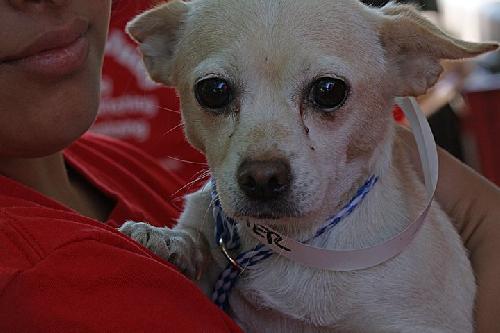
According to www.dogbreedinfo.com, the Chihuahua is the oldest breed on the American continent and the smallest breed in the world. Native to Mexico, nonetheless it seems to have been introduced by the Chinese. It was only brought to Europe at the end of the nineteenth century. The Chihuahua is named after the Mexican state of Chihuahua where he was brought to the rest of the world by travelers. This breed is believed to have been sacred to the Pre-Columbian Indian nations. The Chihuahua is a popular, economical companion dog. Courageous, extremely lively, proud and enterprising, it gives and demands affection. Bold and saucy, it moves swiftly to avoid being stepped on. Chihuahua's are strong-willed, intensely loyal and become very attached to their owners, even to the point of jealousy. They like to lick their owner's faces. It is undeniably suspicious of people except for its owner. When strangers are present, it follows its owner's every move, keeping as close as possible. This breed may snap at teasing children, after all it is too tiny to get away. The Chihuahua must resort to his sharp teeth in self defense. It is not recommended for children. He can be noisy and may require patience to housebreak. Many owners simply paper train this breed. The Chihuahua hates the cold and may shiver, although this may be due to high metabolism as much as temperature or anxiety. It will tolerate and even appreciate a warm sweater on cooler days. They are good little dogs for apartment life. Although it is tempting to carry these dainty creatures about, they will keep fitter if taken for walks. A body harness is safer than a collar. Don't think that just because he is small he should be confined to a small space. Chihuahuas have a life expectancy of 15 or more years.
Other Pictures of Butter the SoCo Chihuahua (click to see larger version):
;) 26.5k |
;) 29.3k |


Copyright © Pet Rescue by Judy