Welcome to Pet Rescue By Judy!
401 South Laurel Avenue
Sanford, FL 32771
(407) 302-4497
info@petrescuebyjudy.com



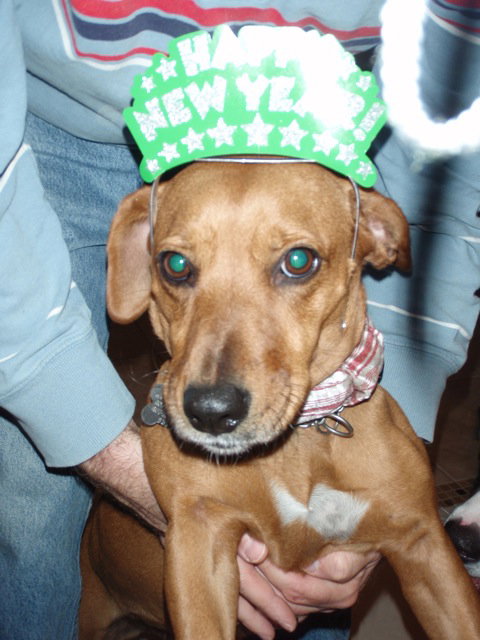
Lynx the Basset Mix's Web Page

| My Rescue |
| Login to Remember your Favorite Animals and Breeds! |
Name: Lynx the Basset Mix
Adoption Fee: $250
Species: Dog
Breed: Basset Hound (short coat)
Learn more about the Basset Hound.Color: Tan
Sex: Female (spayed)
Current Size: 39 Pounds
General Potential Size: Medium
Current Age: 19 Years 3 Months (best estimate)
Activity Level: Moderately Active
Indoor or Outdoor: Indoor Only
Good with Dogs: Yes
Good with Kids: Yes
Microchipped: Yes
Description:
Foster Update - 12/28 - Lynx is very sweet. She takes treats very gently. Lynx doesn't care for certain breeds of dogs including golden retrievers. She is learning to overcome this because she is being fostered with a golden. After only a couple days together, she and the golden were laying together on the couch and Lynx was using the golden as a pillow. Very sweet. Lynx gets along with our family cat. At first she wanted to chase it and bark at it, but she has learned not to do this. She would make an excellent companion dog. She loves to be around people and snuggle on the couch. She is house trained and crate trained. She is so easy to care for. Lynx loves to go on walks.
Lynx came to us from the Orlando Pd. This sweet dog was found wandering around the streets so they brought her to us..we did find that she was adopted and had a microchip but we have tried every which way to contact them but to no avail.
Foster Update - 12/28 - Lynx is very sweet. She takes treats very gently. Lynx doesn't care for certain breeds of dogs including golden retrievers. She is learning to overcome this because she is being fostered with a golden. After only a couple days together, she and the golden were laying together on the couch and Lynx was using the golden as a pillow. Very sweet. Lynx gets along with our family cat. At first she wanted to chase it and bark at it, but she has learned not to do this. She would make an excellent companion dog. She loves to be around people and snuggle on the couch. She is house trained and crate trained. She is so easy to care for. Lynx loves to go on walks.
According to www.dogbreedinfo.com, the name Basset Hound comes from the French word "bas" meaning low. Some sources suggest the Basset Hound may have originated from genetic dwarf dogs presented in litters of other types of French hunting hounds, however, we do know that it is a rather old breed, descended directly from the Bloodhound. Shakespeare described the Basset Hound with the following poetic image: "Ears which sweep away the morning due." According to research, the true fame of the Basset Hound began in 1863, when it was presented at the Paris Dog Show. Its popularity spread to England where a lively dispute arose between two factions of breeders: Those who wanted to keep the Basset Hound a hunting dog, and those who wanted to transform it into a companion dog. Situated between these two factions were the American breeders who proceeded to develop an extremely pleasing companion dog without sacrificing any of the qualities of the hunter. The breed was recognized by the American Kennel Club in 1885. Its natural bent is for hunting both in the den and in the open. It is therefore, used for the hunting of fox, hare, opossum, and pheasant. Bassets can hunt in packs or alone. It has an excellent sense of smell, but its reflexes are a bit slow. Their slow pace is convenient for hunters on foot and keeps game from being scared out of reach. The Basset's nose is almost as outstanding as the Bloodhound's. George Washington may have owned Basset Hounds given to him by Lafayette after the American Revolution. The Basset Hound is sweet, gentle, devoted, peaceful and naturally well-behaved. They fit into family life well. Their temperament should always be friendly with never an indication of sharpness or viciousness. They are mild but not timid; very affectionate with its master and friendly with children. It is incapable of biting, but it may be a bit stubborn. They like to do tricks for food. It has a deep musical bark. Housebreaking is difficult, but they do well with gentle patient training and positive reinforcement. With proper training, they are obedient, but when they pick up an interesting smell, it's sometimes hard to get their attention. They have a life expectancy of 10-12 years.
Other Pictures of Lynx the Basset Mix (click to see larger version):
;) 84.3k |
;) 84.7k |
;) 82.7k |
;) 73.3k |
;) 54.4k |
;) 82.3k |


Copyright © Pet Rescue by Judy