Welcome to Pet Rescue By Judy!
401 South Laurel Avenue
Sanford, FL 32771
(407) 302-4497
info@petrescuebyjudy.com


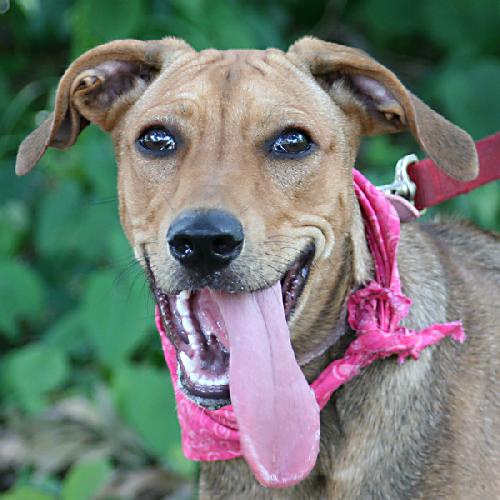
Alabama the Ridgeback Puppy's Web Page

| My Rescue |
| Login to Remember your Favorite Animals and Breeds! |
Name: Alabama the Ridgeback Puppy
Status: Adopted!
Adoption Fee: $200
Species: Dog
Breed: Rhodesian Ridgeback (short coat)
Learn more about the Rhodesian Ridgeback.Color: Brown and Black
Sex: Female (spayed)
Current Size: 40 Pounds
Potential Size: 50 Pounds
General Potential Size: Medium
Current Age: 16 Years 2 Months (best estimate)
Activity Level: Highly Active
Indoor or Outdoor: Indoor Only
Good with Dogs: Yes
Good with Kids: Yes
Microchipped: Yes
Description:
Update June: Poor Alabama is the classic example of why we ask people to really think about adopting a puppy and whether they are willing to put in the necessary training. Alabama is a great pup who just needs to go to obedience class. She does all the normal puppy behaviors of jumping, pulling on the leash, etc. She simply needs to be taught what behavior is good and what isn't. Puppies are blank slates - they need to be taught what behavior we humans like and what we don't. Won't you be the family to give Alabama her second chance?
Alabama is a tiny emancipated puppy who came from to us from 2 teenage girls who found & rescued her. Who knows what the puppy has been thru in the first place? We are going to put some weight on this girl and she'll be ready for her forever home. Thanks girls for your kindness.
Foster Update 01/10: She is doing awesome. She had a large lump on the back of her neck, Judy said maybe a bite or reaction to a vaccine, i think it might have been a cyst, but it popped late last night. She seems a lot more playful now that it is gone. She's been eating great and like I said,
very playful. She's so much different than the dog I picked up from the shelter. She will really blossom in a family environment!
very playful. She's so much different than the dog I picked up from the shelter. She will really blossom in a family environment!
According to www.dogbreedinfo.com, the Rhodesian Ridgeback, originally from Zimbabwe, resulted from crosses between ridgebacked dogs originally kept by native tribes in South Africa and other breeds, such as the Khoikhoi dog, Mastiff, Deerhound and some breeds that are not known. It was the native Khoikhoi dog that gave the Ridgeback his distinctive reverse-hair coat marking, a dominant characteristic that today makes him unique among dog breeds. The ridgebacks were imported by Boer settlers in the 16th and 17th centuries. Its standard, fixed in Rhodesia, dates from 1922. The Rhodesian Ridgeback was used for many purposes. This impressive, protective hound could hunt game, retrieve, take care of children, and guard property. South African hunters discovered that the Ridgeback, used in packs, was very effective against lions, hence the breed's other name, the African Lion Hound. The Rhodesian Ridgeback is well adapted to the harsh African environment. He can withstand very high temperatures and the damp cold of night. It is insensitive to insect bites and can go without food and water for over 24 hours. The Rhodesian Ridgeback is ferocious in the hunt, but in the home it is a calm, gentle, obedient, good dog. Good-natured, but some do not do well with children because they do not want to be pestered or played with roughly. They are intelligent, cunning but straight-forward dogs that are loyal to the family, have something of a mind of their own, are brave, vigilant, reserved toward strangers, and possess considerable stamina. This breed needs thorough obedience training, socialization with people and other dogs, and firm owner leadership to become the excellent companion he can be. Ridgebacks react best to an extremely consistent and equable approach to training. They are intelligent and learn quickly, but they are also strong and a bit stubborn. Training should be gentle and start young while the dog is still small enough to manage. They are also very good watch dogs, but not suggested for guard dogs. They are very protective of owners! This has to be addressed during their early training. This breed can be more destructive than a Lab if left unsupervised! Do not overfeed this breed. Males may be combative with other dogs. Provided this dog meets cats and other pets when it is young, any potential problem will be prevented. Ridgebacks make excellent jogging companions. They have a life expectancy of about 10-12 years.
Other Pictures of Alabama the Ridgeback Puppy (click to see larger version):
;) 72.5k |
;) 34.2k |
;) 39.2k |
;) 80.3k |
;) 25.1k |
;) 82.3k |
;) 90.1k |
;) 20.6k |
;) 20.2k |


Copyright © Pet Rescue by Judy