Welcome to Pet Rescue By Judy!
401 South Laurel Avenue
Sanford, FL 32771
(407) 302-4497
info@petrescuebyjudy.com


Redd the Bengal's Web Page

| My Rescue |
| Login to Remember your Favorite Animals and Breeds! |
Name: Redd the Bengal
Status: Adopted!
Adoption Fee: $150
Species: Cat
Breed: Bengal (short coat)
Color: Red Tabby
Sex: Male (neutered)
Activity Level: Moderately Active
Indoor or Outdoor: Indoor Only
Good with Cats: Yes
Declawed: No
Housetrained: Yes
Description:
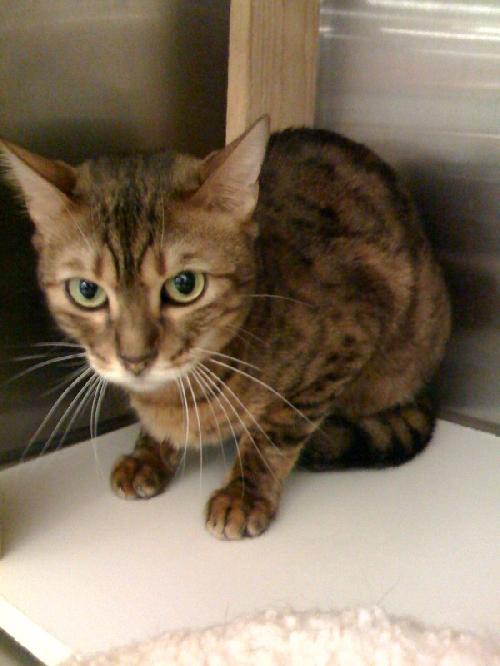
Redd is a beautiful Bengal cat. We rescued him from Seminole County Animal Control where he sad in a cage wondering what the heck was going on. When you see him, you too will wonder what the heck was going on! How could such a beautiful, sweet cat end up in a kill shelter? Who really knows? We'll just make sure that he ends up in a wonderful home. He is all set and ready for his forever home. If you want to see him, he is currently hanging out in the Oviedo Petsmart cat room. I'm sure he'll be adopted soon!
8/13 Volunteer Update:
Wowwww that Bengal is gorgeous!!!! Figures he's there the weekend I'm doing the event. I cannot get over his colorings... He's purrfect!! I just added these photos to his webpage.
According to Petfinder, the Bengal may look like a wild cat, but breeders insist that the Bengal is as lovably friendly and docile as any full-blooded domestic cat. Fanciers describe Bengals as playful, gregarious, and energetic cats that have a generous dose of feline curiosity and that want to be involved with their family. Not intimidated by water, they will sometimes join their family for a swim, as long as it's on their terms.
The Bengal breed originated as a human-made hybrid of the Asian leopard cat and the domestic cat. The leopard cat (Felis bengalensis ) is a cat-sized inhabitant of southern Asia and is thought to be one of the closest of the modern undomesticated cat species to the ancient common ancestor of the cat family.
The leopard cat looks very much like a domestic cat, except for the larger, snapping eyes, pronounced whisker pads, longer legs, and brilliant leopard markings. He looks, in fact, like a miniature leopard. The Bengal began his journey toward becoming a recognized breed in 1963 when breeder Jean Mill of Covina, California, bought a female leopard cat from a pet store. At that time, leopard cats could be purchased in the United States, although today it's illegal to sell them. She wasn't trying to create a new breed of cat, she just wanted a unique pet.
After several years, Mill thought the cat looked lonely, so she put a male domestic cat in the cat's cage to keep her company. She wasn't expecting a romantic relationship, but to Mill's surprise, in 1965 her leopard cat produced a litter.
Only one kitten from the litter survived, a female hybrid that Mill named Kin-Kin. Mill contacted Cornell University College of Veterinary Medicine in Ithaca, New York, for advice on how to handle the hybrid, and was told that Kin-Kin was probably sterile. That, also, proved false. Kin-Kin grew up, mated with her father, and produced two kittens. One was all black and had inherited the wild leopard cat temperament, it refused to let anyone near it. The other, a spotted male, inherited the sweet disposition of a domestic. After some consideration, Mill decided that creating a crossbred breed would benefit the plight of the leopard cats. Mill was dismayed by the plight of orphaned leopard cat cubs taken by hunters and sold to American pet stores. The cats generally ended up in zoos when the cubs grew to adulthood and reverted to their wild ways. Mill wanted to provide the American market with an acceptable spotted substitute.
Volunteer Update: WOW.. everyone that knows me knows that I'm a HUGE Bengal lover..... As soon as I heard about Redd, I ran over to Petsmart to check him out. When I opened his cage I just stood there admiring him... his colorings are just to die for. You must see him in person to appreciate him!
Redd is a beautiful Bengal cat. We rescued him from Seminole County Animal Control where he sad in a cage wondering what the heck was going on. When you see him, you too will wonder what the heck was going on! How could such a beautiful, sweet cat end up in a kill shelter? Who really knows? We'll just make sure that he ends up in a wonderful home. He is all set and ready for his forever home. If you want to see him, he is currently hanging out in the Oviedo Petsmart cat room. I'm sure he'll be adopted soon!
8/13 Volunteer Update:
Wowwww that Bengal is gorgeous!!!! Figures he's there the weekend I'm doing the event. I cannot get over his colorings... He's purrfect!! I just added these photos to his webpage.
According to Petfinder, the Bengal may look like a wild cat, but breeders insist that the Bengal is as lovably friendly and docile as any full-blooded domestic cat. Fanciers describe Bengals as playful, gregarious, and energetic cats that have a generous dose of feline curiosity and that want to be involved with their family. Not intimidated by water, they will sometimes join their family for a swim, as long as it's on their terms.
The Bengal breed originated as a human-made hybrid of the Asian leopard cat and the domestic cat. The leopard cat (Felis bengalensis ) is a cat-sized inhabitant of southern Asia and is thought to be one of the closest of the modern undomesticated cat species to the ancient common ancestor of the cat family.
The leopard cat looks very much like a domestic cat, except for the larger, snapping eyes, pronounced whisker pads, longer legs, and brilliant leopard markings. He looks, in fact, like a miniature leopard. The Bengal began his journey toward becoming a recognized breed in 1963 when breeder Jean Mill of Covina, California, bought a female leopard cat from a pet store. At that time, leopard cats could be purchased in the United States, although today it's illegal to sell them. She wasn't trying to create a new breed of cat, she just wanted a unique pet.
After several years, Mill thought the cat looked lonely, so she put a male domestic cat in the cat's cage to keep her company. She wasn't expecting a romantic relationship, but to Mill's surprise, in 1965 her leopard cat produced a litter.
Only one kitten from the litter survived, a female hybrid that Mill named Kin-Kin. Mill contacted Cornell University College of Veterinary Medicine in Ithaca, New York, for advice on how to handle the hybrid, and was told that Kin-Kin was probably sterile. That, also, proved false. Kin-Kin grew up, mated with her father, and produced two kittens. One was all black and had inherited the wild leopard cat temperament, it refused to let anyone near it. The other, a spotted male, inherited the sweet disposition of a domestic. After some consideration, Mill decided that creating a crossbred breed would benefit the plight of the leopard cats. Mill was dismayed by the plight of orphaned leopard cat cubs taken by hunters and sold to American pet stores. The cats generally ended up in zoos when the cubs grew to adulthood and reverted to their wild ways. Mill wanted to provide the American market with an acceptable spotted substitute.
Volunteer Update: WOW.. everyone that knows me knows that I'm a HUGE Bengal lover..... As soon as I heard about Redd, I ran over to Petsmart to check him out. When I opened his cage I just stood there admiring him... his colorings are just to die for. You must see him in person to appreciate him!
Other Pictures of Redd the Bengal (click to see larger version):
;) 36k |
;) 39k |


Copyright © Pet Rescue by Judy