Welcome to Pet Rescue By Judy!
401 South Laurel Avenue
Sanford, FL 32771
(407) 302-4497
info@petrescuebyjudy.com


Jor-El the Super Dog's Web Page

| My Rescue |
| Login to Remember your Favorite Animals and Breeds! |
Name: Jor-El the Super Dog
Status: Adopted!
Adoption Fee: $200.00
Species: Dog
Breed: Siberian Husky (medium coat)
Learn more about the Siberian Husky.Color: White and Brown
Sex: Male (neutered)
Current Size: 53 Pounds
General Potential Size: Large
Current Age: 17 Years 7 Months (best estimate)
Activity Level: Highly Active
Indoor or Outdoor: Indoor Only
Good with Dogs: Yes
Housetrained: Yes
Microchipped: Yes
Description:
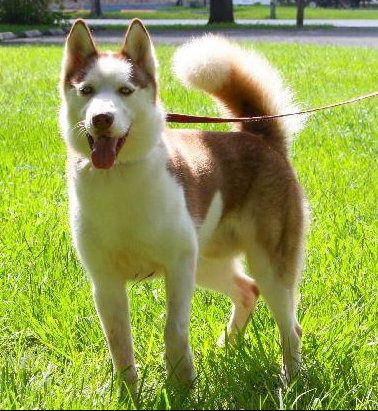
Jor-El is a stunning brown and white husky. He has a great temperament--happy, playful, easy to get along with--but like many huskies, he can be stubborn. When you walk him on the leash, he will test you, and he's quite strong. You need to be able to tell him "NO" firmly, and lead him where you want. Once he figures out you're not kidding around, he will walk close to you. He will sit in the crate, but when he wants out, he wants out. We think, for right now, someone experienced with the breed or with other large breeds would be best. Besides his super personality, we have also discovered that Jor-El has super powers. He can leap tall buildings in a single bound! Okay, that's an exaggeration. But he can jump a six-foot fence. As two of our staff drove around the neighborhood frantically searching, Jor-El gave everyone the slip and strolled right back up to the front door.
Foster Update (8/21/13)
Staff Update (8/3/13): I thought it might be nice for Jor-El to have some one-on-one time, so I took him with me to run a few errands. He did very well in the car, and sat in the passenger seat next to me. We went to the bank drive-through and--even better!!--for ice cream! (He got plain vanilla soft-serve, and I'd checked the ingredients beforehand to make sure it was safe for him to eat.) Our experience made me think he's been to drive throughs before, because he got extremely excited when we drove around after I ordered. He jumped on my lap and was trying to get out the (closed) window. Ever had 50 pounds of excited dog on your lap, in an enclosed environment? I had to wrestle him back into his seat. But he quickly grasped that he could only have ice cream if he sat still.
Like many dogs in the south, Jor-El is heartworm positive but don't let that stop you from adopting a great dog. We are treating him with monthly heartworm preventative, our preferred method. Many heartworm positive dogs go on to lead long and healthy lives.
Native to Siberia, Huskies were used for centuries by the Chukchi people to pull sleds, herd reindeer and perform watchdogging functions. They were perfect working dogs for the harsh Siberian conditions: hardy, able to integrate into small packs, and quite happy to work for hours on end. The Siberian Husky is a very light-weight sled dog with great stamina. It was brought to Alaska in 1909 by fur traders in Malamute for arctic races because of their great speed. In 1925 there was a diphtheria epidemic in Nome, Alaska and many dog teams relayed the precious medicine to the stricken city. This event focused national attention on the Siberian Husky and helped popularize the breed. The Siberian Husky was also used during Admiral Byrd's Antarctic Expeditions. An excellent pack animal, the Husky gets along well with his comrades. These dogs are gentle and playful, but willful and mischievous. This cheerful dog is very fond of his or her family. A puppy at heart, they are clever, sociable and loving, easy-going and docile. Good with children and friendly with strangers, they are not watchdogs, for they bark little and love everyone. Huskies are very intelligent and trainable, but they have a mind of their own and will only obey a command if they see the point. Training takes patience, consistency and an understanding of the Arctic dog character. This dog will take advantage of you if he can. Huskies make an excellent jogging companion, as long as it is not too hot. This breed likes to howl and gets bored easily. They do not like to be left alone, so if this is the breed for you, you may want to consider having two. A lonely Husky can be very destructive. Remember that the Husky is a sled dog in heart and soul. They are good with other pets if they are raised with them from puppyhood. Huskies are thrifty eaters and need less food than you might expect. This breed likes to roam. They are not usually recommended for apartments, however they can live in apartments if well trained and properly exercised. Siberian Huskies are very active indoors and do best with a fenced-in large yard. Because of their heavy coats, these dogs prefer cool climates. One has to use common sense with respect to maintaining them in the heat by providing adequate shade and air conditioning. It is a common misconception that all Siberians have blue eyes. They can have eyes that are blue, brown, amber, or any combination thereof including eyes which are half blue and half brown, which is referred to as being parti-eyed. Having one blue eye and one brown eye is referred to as being bi-eyed. The large "snow shoe" feet have hair between the toes for gripping on ice. The Siberian Husky has a thick, wooly undercoat and a soft outer coat. It is able to withstand temperatures as low as -58 degrees to -76 degrees F. They have a life expectancy of about 12-15 years.
Jor-El is a stunning brown and white husky. He has a great temperament--happy, playful, easy to get along with--but like many huskies, he can be stubborn. When you walk him on the leash, he will test you, and he's quite strong. You need to be able to tell him "NO" firmly, and lead him where you want. Once he figures out you're not kidding around, he will walk close to you. He will sit in the crate, but when he wants out, he wants out. We think, for right now, someone experienced with the breed or with other large breeds would be best. Besides his super personality, we have also discovered that Jor-El has super powers. He can leap tall buildings in a single bound! Okay, that's an exaggeration. But he can jump a six-foot fence. As two of our staff drove around the neighborhood frantically searching, Jor-El gave everyone the slip and strolled right back up to the front door.
Foster Update (8/21/13)
- Appearance: red and white Siberian husky with blue eyes, weight 55 lbs
- Energy Level: high energy – needs daily exercise and then behaves well inside. We walk him 1 mile in the morning thru the week and 2 miles on the weekends. I take him to the dog park 2 evenings a week so he can run and swim and walk him 1 mile the other evenings or play with him in the yard.
- Training: House trained (no accidents). He is good in the house and has no chewing issues so I don’t crate him. He walks well on a leash with a prong collar. He is a strong dog. He is excited when he first starts the walk but calms down after the first couple of blocks. I use a regular leash to take him to the park and he does okay going to the car and to the park from the car. We walk him with 2 other dogs.
- Obedience : He knows “sit” and sits for a treat or his meal. He knows “come” and “wait” at the door. He makes great eye contact and seems to want to please. He is treat motivated. He will sit and wait his turn to get a treat while I give treats to the other dogs. He does not get on the bed but enjoys sitting by me on the couch and likes to sit on my husband’s lap when he’s in his chair. He gets down when asked. He doesn’t seem to know how big he is and is playful like a puppy at times. He has not counter-surfed and is respectful to other dogs.
- Adaptability: Jor-El seems very well balanced and adapted quickly to my family and dogs and our routine. He learned to use the dog door the first day. He seems very happy and should adjust well to his new owner(s).
- Human Social Skills: He is very friendly with people. He enjoys being petted, following us around the yard and being in the room with us when we watch TV. He welcomed our guests and their dog and is comfortable with people at the dog park.
- Animal Social Skills: Jor-El plays well with my dogs and another foster dog. He enjoys meeting new dogs at the dog park and playing chase with them or swimming near them in the lake. He “talks/howls” when another husky starts the conversation. I have seen no aggression from him towards another dog. A dog was growly and picked at him and he left the area and found someone else to play with. He is very good with dogs of all sizes and really enjoys playing with our 30 lb cattle dog.
- Personality Quirks: none - super dog
- Food: Jor-El eats 1 ½ cups of Taste of the Wild dry twice a day. He has a couple of treats mid day. He loves to eat and gets excited over anything I feed him. I have him sit to calm him before I give him a treat or his dish. I add chicken, brown rice and green beans a couple of times a week. He is not food aggressive.
- Ideal Home: Jor-El would love a home with an active, friendly owner or family, a fenced yard and another playful dog. He enjoys attention from people and dogs.
Staff Update (8/3/13): I thought it might be nice for Jor-El to have some one-on-one time, so I took him with me to run a few errands. He did very well in the car, and sat in the passenger seat next to me. We went to the bank drive-through and--even better!!--for ice cream! (He got plain vanilla soft-serve, and I'd checked the ingredients beforehand to make sure it was safe for him to eat.) Our experience made me think he's been to drive throughs before, because he got extremely excited when we drove around after I ordered. He jumped on my lap and was trying to get out the (closed) window. Ever had 50 pounds of excited dog on your lap, in an enclosed environment? I had to wrestle him back into his seat. But he quickly grasped that he could only have ice cream if he sat still.
Like many dogs in the south, Jor-El is heartworm positive but don't let that stop you from adopting a great dog. We are treating him with monthly heartworm preventative, our preferred method. Many heartworm positive dogs go on to lead long and healthy lives.
PRBJ treats ALL of our dogs with monthly Heartworm preventative. HW+ dogs are treated with the recommended slow method, using monthly HW preventative as it is gentler on the animal’s system than the more invasive, injection method. Most dogs that are Heartworm positive can lead healthy, normal lives if the disease is caught early and treatment began. There are different options to treat HW and new owners may choose to redirect their type of treatment with direction of their vet.All HW+ dogs have a HW slow treatment info sheet in their adoption folder which will be provided to new owners.
Native to Siberia, Huskies were used for centuries by the Chukchi people to pull sleds, herd reindeer and perform watchdogging functions. They were perfect working dogs for the harsh Siberian conditions: hardy, able to integrate into small packs, and quite happy to work for hours on end. The Siberian Husky is a very light-weight sled dog with great stamina. It was brought to Alaska in 1909 by fur traders in Malamute for arctic races because of their great speed. In 1925 there was a diphtheria epidemic in Nome, Alaska and many dog teams relayed the precious medicine to the stricken city. This event focused national attention on the Siberian Husky and helped popularize the breed. The Siberian Husky was also used during Admiral Byrd's Antarctic Expeditions. An excellent pack animal, the Husky gets along well with his comrades. These dogs are gentle and playful, but willful and mischievous. This cheerful dog is very fond of his or her family. A puppy at heart, they are clever, sociable and loving, easy-going and docile. Good with children and friendly with strangers, they are not watchdogs, for they bark little and love everyone. Huskies are very intelligent and trainable, but they have a mind of their own and will only obey a command if they see the point. Training takes patience, consistency and an understanding of the Arctic dog character. This dog will take advantage of you if he can. Huskies make an excellent jogging companion, as long as it is not too hot. This breed likes to howl and gets bored easily. They do not like to be left alone, so if this is the breed for you, you may want to consider having two. A lonely Husky can be very destructive. Remember that the Husky is a sled dog in heart and soul. They are good with other pets if they are raised with them from puppyhood. Huskies are thrifty eaters and need less food than you might expect. This breed likes to roam. They are not usually recommended for apartments, however they can live in apartments if well trained and properly exercised. Siberian Huskies are very active indoors and do best with a fenced-in large yard. Because of their heavy coats, these dogs prefer cool climates. One has to use common sense with respect to maintaining them in the heat by providing adequate shade and air conditioning. It is a common misconception that all Siberians have blue eyes. They can have eyes that are blue, brown, amber, or any combination thereof including eyes which are half blue and half brown, which is referred to as being parti-eyed. Having one blue eye and one brown eye is referred to as being bi-eyed. The large "snow shoe" feet have hair between the toes for gripping on ice. The Siberian Husky has a thick, wooly undercoat and a soft outer coat. It is able to withstand temperatures as low as -58 degrees to -76 degrees F. They have a life expectancy of about 12-15 years.
Other Pictures of Jor-El the Super Dog (click to see larger version):
;) 37.7k |
;) 47.6k |
;) 65k |
;) 133.5k |
;) 42.5k |
;) 36.2k |
;) 47.9k |


Copyright © Pet Rescue by Judy