


| My Rescue |
| Login to Remember your Favorite Animals and Breeds! |
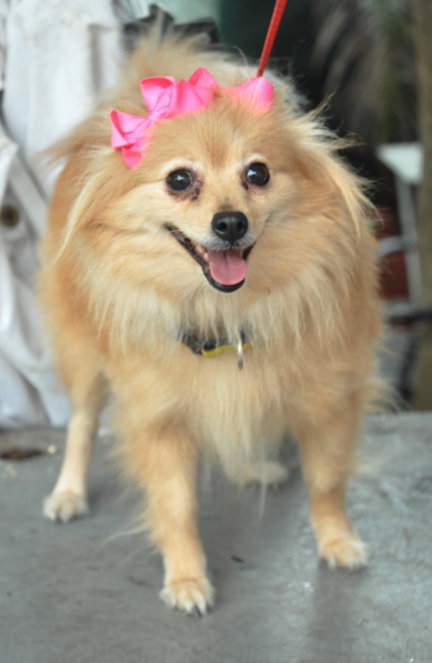
Lola came to us from her former owner, who despite her proclamations of love never took Lola to a vet in the four years she had her. She also told us that Lola was living on a diet of cat food and human food. As soon as we got Lola, we realized that she was under the weather. Judy rushed her to the vet, only to realize that Lola had a bladder stone. Not only was it a bladder stone, but it was the largest stone our vet had ever seen! There is a picture below. We are happy to let you know that Lola is recovering from her surgery and is now looking for a new owner who will feed her the proper nutritional diet so she does not have this happen again!
Her former owner had this to say about her: "Lola is housebroken and loves people. She gets along with older children. Lola is very loving and I spoiled her rotten. We had every doggie accessory, strollers, clothes, and toys galore. I loved her with all my heart and I hope she gets a new loving home soon. She was my best friend."
Medical update 9/9: We are waiting on the lab results as to what type of stone she had and if she needs to be on a special diet. Otherwise she is 100% healthy and ready for adoption but any adopter should know she most likely will need to be a prescription diet much like Science Diet C/D or S/D for the rest of her life. Were hoping to find a wonderful home that will love her and give her proper medical care!
adoped in the Prussian region of Pomerania, the Pomeranian was originally descended from the ancient Spitz breeds of the far north which were brought to Europe and employed to herd sheep. The Pom ancestors weighed up to 30 pounds. Marie Antoinette, Emile Zola and Mozart all owned Pomeranians. In the late 1800's Queen Victoria became a Pomeranian fancier, and established her own kennel for their breeding. She showed her dogs, with some success, making the breed very popular in England. Because Queen Victoria preferred smaller dogs, many breeders began selecting for smaller size. Now the Pomeranian has been bred down from his original size to customary 4-5 pounds. The Pomeranian's intelligence and talent for showmanship have also made him a superior circus performer. Today's Pomeranian is primarily a loving companion and beautiful show dog. Some of the Pom's talents include: watchdogging, agility and performing tricks. The Pomeranian is a lively little dog. Intelligent, eager to learn, very loyal to its handler and family. Willful, bold and sometimes temperamental. If it is properly introduced they usually get along with other dogs and household animals without any problems, but some of them seem to think they are much larger than they actually are and do not hesitate to attack much bigger dogs. It is an excellent watchdog with a resounding bark. Poms have a tendency to be reserved and bark at strangers excessively. Teach this dog early that it may bark a couple of times when the doorbell rings or when there are visitors, but then to keep quiet. Be very consistent about this. They are alert, curious and busy: one of the most independent of the Toy breeds. Poms have a delightful nature and do not cling to their handlers. Proud and happy, they are good at learning tricks, but need a firm hand. The Pomeranian must know the owner is the boss, or he will not listen. This breed may become too demanding if the owner allows it. Not recommended for very young children. Too much attention from children can make these dogs nervous and they may become snappish. However, they can get along well with older, well behaved children. It is a good companion for an elderly person. The Pom is a wonderful companion dog and show ring contender. The breed's docile temper and affectionate nature endear it to many. Its vivacity and spirit make it well-liked by persons who do not usually care for toy dogs.
Other Pictures of Lola the Pomeranian (click to see larger version):
;) 33.3k |
;) 28.8k |
;) 19.3k |
;) 15.4k |
;) 42.8k |


Copyright © Pet Rescue by Judy