Welcome to Pet Rescue By Judy!
401 South Laurel Avenue
Sanford, FL 32771
(407) 302-4497
info@petrescuebyjudy.com


Rocky the Little Papillion's Web Page

| My Rescue |
| Login to Remember your Favorite Animals and Breeds! |
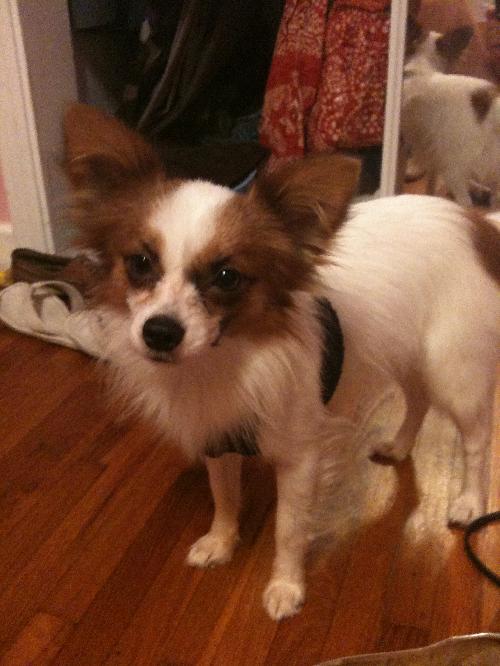
Name: Rocky the Little Papillion
Status: Adopted!
Adoption Fee: $450.00
Species: Dog
Breed: Papillon (medium coat)
Learn more about the Papillon.Color: Tricolored
Pattern: Tricolor
Sex: Male (neutered)
Current Size: 5.9 Pounds
Potential Size: 6.2 Pounds
General Potential Size: Small
Current Age: 16 Years 5 Months (best estimate)
Activity Level: Moderately Active
Indoor or Outdoor: Indoor Only
Good with Dogs: Yes
Good with Cats: Yes
Housetrained: No
Microchipped: Yes
Description:
Rocky is a cute little purebreed Papillion whom is looking for his forever home. His owner could not keep him anymore due to working long hours and finacial issues. He is good with dogs and cats! He is so sweet and loving and tiny! He is at less than 6 lbs at about 1 year of age. He might gain a pound or so but we suspect he is fully grown!
Poor Rocky was adopted from us a couple of weeks ago but was sadly returned because he was "disrupting the household" He is a sweet loving dog but does have some chewing habits and is not fully housetrained. I would strong recommend crate training this dog when the owner is gone or he can not be watch. Rocky is a young dog and has plenty of puppy left in him so someone whom adopts him should expect plenty of energy and some puppy behaviors!
According to www.dogbreedinfo.com, the Papillon is one of the oldest breeds of dog, with a recorded history in Europe going back nearly 700 years. The breed was originally called the epagneul nain or dwarf spaniel, and sported spaniel-type dropped ears. The dog was later known as the Continental Toy Spaniel (or sometimes just toy spaniel), and this tiny breed is recognizable in 13th through 15th century Italian frescoes. It was featured in many paintings of the Renaissance period; in fact much of the breed's development is known because of its depiction in paintings. The breed was widespread in Italy during the Renaissance and later perfected by French breeders. The Papillon is sometimes called the butterfly dog - because the ears look like butterfly wings. It is a friendly, intelligent dog that is tougher than it looks, and loves outdoor exercise. A gentle and affectionate dog, lively, vivacious and charming. Playful and amusing but can also be calm, patient, gentle and dignified. Steady and silent. Loves to be cuddled but also likes to romp outdoors. They are steady, obedient and are not yappers. Papillons can be trained to perform small tricks. Good with cats when they are socialized with them. They can also be difficult to housebreak, but are in general easy to train otherwise. If you allow this dog to become pack leader to humans, it may become very possessive of its owner and resent outsiders. When a dog believes he is pack leader to humans, it is called Small Dog Syndrome, human induced behaviors, where the dog is allowed to believe he owns the house. This can cause a varying degree of behavior problems such as, but not limited to, being, nervous, high-strung, timid, separation anxiety, guarding, growling, snapping, biting, obsessive barking, dog aggression and being untrustworthy with children. These are not Papillon traits, but rather behaviors brought on by the way humans are treating the dog. Since most people who own small dogs, because of their size, unknowingly allow them to run the show, they are not generally recommended for young children. However, if you are your dog's firm, consistent pack leader, providing rules he must follow and limits to what he is and is not allowed to do, along with daily pack walks, the Papillon can be very trustworthy with children. Although they can be good city dogs, they are sometimes not good apartment dogs, because the dog has a strong instinct to protect their property, and many will bark excessively at nearby noises, not making the distinction between casual noises and those worthy of a real alarm. Papillon need a daily walk. Play will take care of a lot of their exercise needs, however, as with all breeds, play will not fulfill their primal instinct to walk. Dogs who do not get to go on daily walks are more likely to display behavior problems. They will also enjoy a good romp in a safe open area off lead, such as a large fenced in yard. Daily combing and brushing of the long, silky, single coat is important and fairly straightforward. These dogs are usually clean and odorless. Bathe or dry shampoo when necessary. Keep the nails clipped and have the teeth cleaned regularly because they tend to accumulate tartar. They are average shedders and do not matt or tangle. Papillons have a life expectancy of as long as 16 years.
Other Pictures of Rocky the Little Papillion (click to see larger version):
;) 43.4k |
;) 45.4k |
;) 48.3k |
;) 40.8k |
;) 57.7k |
;) 40.2k |


Copyright © Pet Rescue by Judy