Welcome to Pet Rescue By Judy!
401 South Laurel Avenue
Sanford, FL 32771
(407) 302-4497
info@petrescuebyjudy.com
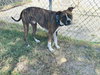


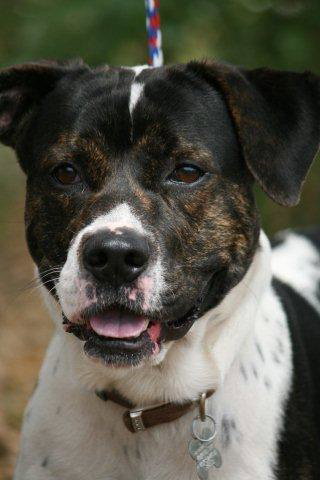
Roscoe the American Bulldog's Web Page

| My Rescue |
| Login to Remember your Favorite Animals and Breeds! |
Name: Roscoe the American Bulldog
Status: Adopted!
Adoption Fee: $175
Species: Dog
Breed: American Bulldog (short coat)
Color: White and Brindle
Sex: Male (neutered)
Current Size: 50 Pounds
General Potential Size: Medium
Current Age: 19 Years 2 Months (best estimate)
Activity Level: Moderately Active
Indoor or Outdoor: Indoor Only
Good with Dogs: Yes
Good with Kids: No
Housetrained: Yes
Microchipped: Yes
Description:
Rosco was surrendered to us because they could not have a dog this size in their home. He has not been very well trained or socialized so he really needs someone who is willing to spend the time training him.
He previously lived in a home with a small dog and did very well. Kids are okay too, as long as they are older (10+). He grew up with cats, but he can play a bit rough with them.
Rosco will make someone a wonderful pet, with the proper training and socialization.
Rosco is currently being fostered at my house. He is living with 5 other dogs and is wonderful with all of them. He is clean in the house, not a chewer and has not shown any food aggression or toy aggression. He does jump short gates or under 4 foot fences.
Foster update: 11-27-10
Rosco has been with me now about 4 months. He is a wonderful boy and is becoming more and more loving. He shows no sign of aggresion with my other dogs or with the puppies I have been fostering. Rosco is very clean in the house and is not distructive in any way.He plays with his toys and plays in the yard with Pittsburg. He does like to sleep on the couch or in my bed.
He loves to get a bath and is easy to groom. He is clean in the crate and house.
(Debbie)
Foster Update:01/09/2011
Roscoe is doing so well. He plays well with all the other dogs. Is very good when crated.
Clean in house and crate.
Still jumping short fences, and doing a little counter surfing.
He would make a nice companion for a couple or single person with time to play and intact with him.
Go for walks or just watch a movie.. he likes to cuddle.
He gets along with all dogs.
(Debbie)
Roscoe adopted today 01/23/2011
I will miss him!!!
(Debbie)
According to www.dogbreedinfo.com, early Bulldogs were used in the bloody sport of bull bating. Some of these dogs emigrated with their masters from England to America. Eventually the English Bulldog was bred down in size and his personality was softened, but the American version remained a larger, fiercer dog. The American version has longer legs and more speed and agility than the English show dog. Thanks to the efforts of John D. Johnson of Summerville, Georgia the American Bulldog exists today. After he returned from WW II he was disappointed to find that, like the English Mastiff, they were almost completely extinct. He then decided to gather the best he could find from all across the rural south and bring them back from the brink of extinction. He has been breeding these dogs longer than anyone else in the world and his father bred them before him. He is an old man now (in his 80's) and these dogs have always existed in his family. He is the sole reason why they exist today. If it were not for his efforts they surely would be gone. He has been breeding them non-stop since then. The American Bulldog has also been used as a guard and in hunting bear, wild boar, squirrel and raccoon. They have even been trained to drive cattle and guard stock from predators. Farmers prize these dogs for their stamina, protectiveness, intelligence and working abilities. Some of the American Bulldogs talents are hunting, watchdogging, tracking, weight pulling, and guarding. An American Bulldog should never be confused with uniquely different breeds such as the American Staffordshire Terrier or the American Pit Bull Terrier. The American Bulldog is a brave and determined, but not hostile dog. Alert and self-confident, this breed genuinely loves children. It is known for its acts of heroism towards its master. These dogs have fought wild dogs, bulls and even fire. It is said "fighting off one of these dogs is like fighting an animal that possesses an alligator's head and a python's body." Yet when called off by their handler, they immediately obey. No wonder they are said to have "true grit, true devotion and true love." Because of its strong protective instincts, the American Bulldog should be well-socialized and obedience trained at an early age. Some may be aggressive with other dogs and reserved with strangers. They need to be around people to be truly happy. This breed tends to drool and slobber. They have a life expectancy of up to 16 years.
Other Pictures of Roscoe the American Bulldog (click to see larger version):
;) 64.2k |
;) 107k |
;) 99.5k |


Copyright © Pet Rescue by Judy