Welcome to Pet Rescue By Judy!
401 South Laurel Avenue
Sanford, FL 32771
(407) 302-4497
info@petrescuebyjudy.com


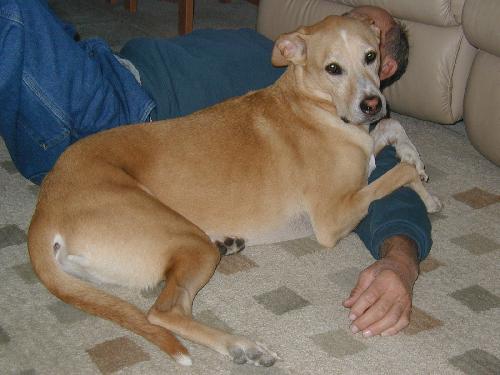
Chewy the Greyhound's Web Page

| My Rescue |
| Login to Remember your Favorite Animals and Breeds! |
Name: Chewy the Greyhound
Adoption Fee: $150
Species: Dog
Breed: Greyhound / Labrador Retriever (short coat)
Learn more about the Greyhound.Learn more about the Labrador Retriever.
Color: Tan
Sex: Male (neutered)
Current Size: 65 Pounds
General Potential Size: Medium
Current Age: 21 Years (best estimate)
Activity Level: Moderately Active
Indoor or Outdoor: Indoor Only
Good with Dogs: Yes
Good with Kids: No
Housetrained: Yes
Description:
Chewy is a very cool Greyhound/Lab mix. He looks more Greyhound but with the personality of a Lab. He was surrendered to us because his owners they weren't comfortable with how Chewy and their toddler were interacting. Chewy was not aggressive to the baby but we think he would do best in a home with children at least 5 years old.
Foster Update 2/27: Chewy is the PERFECT dog, much better than our dog! He sits, is quiet expect when he sees someone outside. He is completely housebroken and can hold it all day. He very calm in the house just lays around on the bed, and loves to run outside. He seems to be afraid of the pool but likes the lake. Chewy enjoys chasing cats outside but does not pay too much attention to them inside. He is a very nervous dog in new situation and at adoption events, but LOVES the dog park. He gets a little nervous around younger children and new people. Chewy would be even be happy in an apartment as long as he got some trips to the dog park!!
2/7 Volunteer Update:
I have found that when people label a dog "Greyhound mix" it is usually wishful thinking. In this case, no way! Chewy is definately part Greyhound ~ he has the neck, the gate, the nervousness. And he is sooooo beautiful. Chewy is very sweet and gentle and just loves to be walked. And he doesn't pull! Wow, when was the last time you walked a dog who wasn't trying to walk you!!! I think he was just grateful to be out of the shelter and stretching his legs. He seems to be a rather submissive and timid dog, and so far has been great with all the kids he has met. Chewy is one of the moste delightful and tender souls that I have met at our Center. Undooubtably, he will make a wonderful addition to a home!
According to www.dogbreedinfo.com, this very ancient breed is the fastest dog in the world and can reach speeds of over 40 miles per hour (65 km/h). Its greatest gift is its speed. They are thought to have originally descended from the Arabian Sloughi and brought to England by traders before 900 AD. Centuries ago it was used in the hunting of deer and wild boar. It could catch them and pull them down without stopping. It is also an incorrigible enemy of domestic animals, especially cats and geese. Today they are used primarily in dog racing (where they chase mechanical rabbits). This sport is especially popular in Anglo-Saxon countries. After retiring from a racing career, these dogs are often destroyed. Greyhound Rescue groups select the most even-tempered, gentle racers for placement into homes, with excellent success. Their talents include hunting, sighting, watchdogging, racing, agility, and lure coursing.
Sensitive, sweet and elegant. Brave and loyal, but can be willful. The Greyhound is very intelligent, but its character is often undervalued because of its reserved behavior toward its master and toward strangers. Socialize them at an early age to prevent timidity. As a rule, they are gentle and even-tempered - both racing lines and show lines. Here's a comment from the book "THE GREYHOUND," by D.Stern:
"Of course, no matter what type of Greyhound you choose, your are in for a treat. The Greyhound is an affectionate, gentle, graceful creature that has kept human beings company for thousands of years."
Most Greyhounds have a definite prey instinct. It is instinctive for these dogs to chase anything that moves quickly. They are extremely fast and some will kill cats and other domestic animals, although this is not the majority (only about 20% of ex-racers are too "keen" on chasing prey to ever be safe with small animals). About 10% are immediately okay due to low prey instinct, and the rest can be trained to leave cats and other small pets in the home alone. They seldom present difficulties with other dogs and are normally good with children, though they do not usually like rough-house play, and would not be a good choice for young children. Indoors, these dogs are calm and sociable to a point where they can even be considered lazy. They bond strongly with their own people, have tremendous stamina, and do not bark much. Show lines tend to be of a different body style than racing lines, and are often more angulated. Racing lines are bred for performance, but often a good by-product are friendly, outgoing dogs, who make wonderful pets when their racing days are over. Greyhounds are not particularly vigilant. Show lines tend to be a bit heavier and bred more for temperament than racing lines, therefore dogs from show lines often make better pets, but racing lines can also make wonderful pets. There are hundreds of adoption groups all over North America, Europe and Australia to place these gentle, loving dogs when they retire. Retired racing Greyhounds are not usually difficult to housebreak. They are already crate trained from the track, so it doesn't take them long to learn that they are not to "go" in the house. There are several books on the market, written by highly experienced adopters and adoption workers to help new adopters through this process, and answer almost any question that can arise.
They have a life expectancy of 10-12 years.
Chewy is a very cool Greyhound/Lab mix. He looks more Greyhound but with the personality of a Lab. He was surrendered to us because his owners they weren't comfortable with how Chewy and their toddler were interacting. Chewy was not aggressive to the baby but we think he would do best in a home with children at least 5 years old.
Foster Update 2/27: Chewy is the PERFECT dog, much better than our dog! He sits, is quiet expect when he sees someone outside. He is completely housebroken and can hold it all day. He very calm in the house just lays around on the bed, and loves to run outside. He seems to be afraid of the pool but likes the lake. Chewy enjoys chasing cats outside but does not pay too much attention to them inside. He is a very nervous dog in new situation and at adoption events, but LOVES the dog park. He gets a little nervous around younger children and new people. Chewy would be even be happy in an apartment as long as he got some trips to the dog park!!
2/7 Volunteer Update:
I have found that when people label a dog "Greyhound mix" it is usually wishful thinking. In this case, no way! Chewy is definately part Greyhound ~ he has the neck, the gate, the nervousness. And he is sooooo beautiful. Chewy is very sweet and gentle and just loves to be walked. And he doesn't pull! Wow, when was the last time you walked a dog who wasn't trying to walk you!!! I think he was just grateful to be out of the shelter and stretching his legs. He seems to be a rather submissive and timid dog, and so far has been great with all the kids he has met. Chewy is one of the moste delightful and tender souls that I have met at our Center. Undooubtably, he will make a wonderful addition to a home!
According to www.dogbreedinfo.com, this very ancient breed is the fastest dog in the world and can reach speeds of over 40 miles per hour (65 km/h). Its greatest gift is its speed. They are thought to have originally descended from the Arabian Sloughi and brought to England by traders before 900 AD. Centuries ago it was used in the hunting of deer and wild boar. It could catch them and pull them down without stopping. It is also an incorrigible enemy of domestic animals, especially cats and geese. Today they are used primarily in dog racing (where they chase mechanical rabbits). This sport is especially popular in Anglo-Saxon countries. After retiring from a racing career, these dogs are often destroyed. Greyhound Rescue groups select the most even-tempered, gentle racers for placement into homes, with excellent success. Their talents include hunting, sighting, watchdogging, racing, agility, and lure coursing.
Sensitive, sweet and elegant. Brave and loyal, but can be willful. The Greyhound is very intelligent, but its character is often undervalued because of its reserved behavior toward its master and toward strangers. Socialize them at an early age to prevent timidity. As a rule, they are gentle and even-tempered - both racing lines and show lines. Here's a comment from the book "THE GREYHOUND," by D.Stern:
"Of course, no matter what type of Greyhound you choose, your are in for a treat. The Greyhound is an affectionate, gentle, graceful creature that has kept human beings company for thousands of years."
Most Greyhounds have a definite prey instinct. It is instinctive for these dogs to chase anything that moves quickly. They are extremely fast and some will kill cats and other domestic animals, although this is not the majority (only about 20% of ex-racers are too "keen" on chasing prey to ever be safe with small animals). About 10% are immediately okay due to low prey instinct, and the rest can be trained to leave cats and other small pets in the home alone. They seldom present difficulties with other dogs and are normally good with children, though they do not usually like rough-house play, and would not be a good choice for young children. Indoors, these dogs are calm and sociable to a point where they can even be considered lazy. They bond strongly with their own people, have tremendous stamina, and do not bark much. Show lines tend to be of a different body style than racing lines, and are often more angulated. Racing lines are bred for performance, but often a good by-product are friendly, outgoing dogs, who make wonderful pets when their racing days are over. Greyhounds are not particularly vigilant. Show lines tend to be a bit heavier and bred more for temperament than racing lines, therefore dogs from show lines often make better pets, but racing lines can also make wonderful pets. There are hundreds of adoption groups all over North America, Europe and Australia to place these gentle, loving dogs when they retire. Retired racing Greyhounds are not usually difficult to housebreak. They are already crate trained from the track, so it doesn't take them long to learn that they are not to "go" in the house. There are several books on the market, written by highly experienced adopters and adoption workers to help new adopters through this process, and answer almost any question that can arise.
They have a life expectancy of 10-12 years.
Other Pictures of Chewy the Greyhound (click to see larger version):
;) 28.3k |
;) 33.4k |
;) 30.3k |
;) 52.5k |
;) 40.6k |
;) 13.6k |


Copyright © Pet Rescue by Judy